Curcumin supplements have exploded in popularity, yet most people absorbing standard curcumin extract get little benefit. The reason is simple: curcumin has notoriously poor bioavailability. A new wave of enhanced curcumin formulations—including CurcuminQA™—promises to fix that. But how does CurcuminQA™ compare to Longvida®, Meriva®, NovaSOL®, and other market leaders? This evidence-based review breaks down the science.
What Is Curcumin and Why Does Bioavailability Matter?
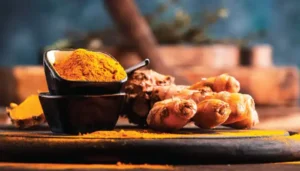
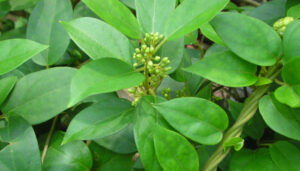
Curcumin is the primary bioactive polyphenol and yellow pigment found in turmeric (Curcuma longa L.) rhizomes. Used for centuries in traditional medicine for digestive, skin, joint, and respiratory conditions, curcumin is now recognized for a broad pharmacological profile: anti-inflammatory, antioxidant, antimicrobial, and potential anticancer activity.
Key mechanisms include suppression of the NF-κB inflammatory pathway, reduced pro-inflammatory cytokine production, and free radical scavenging. Despite this, standard curcumin supplements fail to deliver meaningful plasma concentrations—making formulation technology the critical differentiator.
Why Standard Curcumin Supplements Don’t Work
Standard curcumin extract’s clinical utility is hampered by three core pharmacokinetic problems:
- Poor oral bioavailability — caused by low aqueous solubility and a highly hydrophobic molecular structure
- Rapid hepatic and gastrointestinal metabolism — glucuronidation and sulfation rapidly inactivate the molecule
- Rapid elimination — short systemic availability even at high doses (2–8 g)
To overcome these barriers, researchers have developed advanced delivery systems—nanomicelles, liposomes, phytosomes, nanoparticles, and metabolic inhibitor adjuvants—to enhance absorption and stability.
What Is CurcuminQA™? The Quantum Ayurveda Approach Explained
CurcuminQA™ is a highly bioavailable curcumin formulation developed by Greenspace. Unlike carrier-dependent technologies, it is built on “Quantum Ayurveda”—a framework that integrates traditional Ayurvedic principles with AI and quantum chemistry to stabilize curcumin in an energized, metastable state for enhanced cellular uptake.
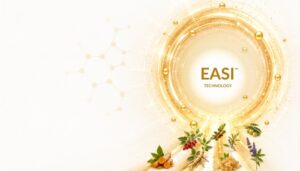
The result is a carrier-free, simpler formulation that achieves rapid absorption without the phospholipids, lipids, or surfactants that competing products rely on. The technology—Energized Absorption and Stability Innovation (EASI)—uses a frequency-driven energization process to prime curcumin molecules for solubility and uptake.
CurcuminQA™ Clinical Trial Results: 22× Higher Blood Levels Than Standard Curcumin
A randomized, open-label, two-way crossover trial in 60 healthy adult volunteers compared a single 500 mg dose of CurcuminQA™ against a standard 95% curcumin extract, administered without fasting. Key pharmacokinetic findings:
| Parameter | CurcuminQA™ (500 mg) | Standard 95% Extract | Difference |
| Peak Blood Levels (Cmax) | ~454 ng/mL | ~20 ng/mL | 22× higher |
| Total Absorption (AUC) | ~1,233 ng·h/mL | ~57 ng·h/mL | 20× greater |
| Time to Peak (Tmax) | ~1 hour | ~2 hours | 2× faster |
| Half-Life (t½) | ~4 hours | ~4 hours | Similar |
Source: Randomized open-label crossover study, World Journal of Pharmacy and Medical Science, 2026.
CurcuminQA™ vs. Leading Curcumin Formulations: Side-by-Side Comparison
How does CurcuminQA™ stack up against Longvida®, Meriva®, NovaSOL®, BCM-95, Theracurmin, and other popular enhanced curcumin supplements?
| Formulation | Dose | Technology | Mechanism | Bioavailability Enhancement |
| CurcuminQA™ | 500 mg | EASI | Frequency-driven energization; metastable curcumin state | >20× |
| NovaSOL® | 500 mg | Micellar dispersion | Nano-micelles for water dispersibility | ~185× |
| Longvida® | 160 mg | SLCP (Solid Lipid) | Lipid matrix protects from metabolism | ~65–285× |
| Meriva® | 1,000 mg | Phytosome | Curcumin–phospholipid complex for membrane transport | ~29× |
| Theracurmin | 600 mg | Colloidal nanoparticles | Reduced particle size for better dispersion | >27× |
| BCM-95 | 250–500 mg | Essential oil matrix | P-glycoprotein inhibition via turmeric essential oils | ~7× |
| CurcuWin® | 250–500 mg | Nanotechnology | Water-dispersible unique absorption technology | ~46× |
| Curcumin + Piperine | — | Adjuvant approach | Piperine inhibits metabolic enzymes | ~20× |
Note: Enhancement ratios are as reported in respective clinical and pharmacokinetic studies. Direct head-to-head comparisons may vary by study design.
Key Differentiators: CurcuminQA™ vs. Carrier-Based Formulations
| Feature | Conventional Formulations | CurcuminQA™ |
| Enhancement method | Nanoparticles, micelles, phytosomes, lipid carriers | Quantum Ayurveda energy activation (EASI) |
| Carrier dependence | High — phospholipids, lipids, surfactants, or oils | Minimal |
| Formulation complexity | Physically complex, multi-step | Simpler, carrier-free |
| Solubility enhancement | Encapsulation or matrix systems | Metastable energy priming |
| Bioavailability uplift | ~7× to 280× depending on formulation | >20× reported |
| Onset of absorption | Typically slower | ~1 hour Tmax (faster) |
| Underlying approach | Physical/chemical modification | Energy-state optimization (AI + quantum chemistry) |
Bottom Line: Is CurcuminQA™ the Right Curcumin for You?
For pharma and nutraceutical formulators, ingredient selection requires weighing bioavailability evidence against cost, process complexity, and dose feasibility. CurcuminQA™’s carrier-free, energy-state approach offers a differentiated option for brands seeking a >20× enhancement at a 500 mg dose without the complexity of lipid or nanoparticle systems.
One consideration worth noting: enhancements reported beyond 20–30× raise questions about metabolic handling and practical dose feasibility that manufacturers should evaluate in full-population pharmacokinetic studies.
Disclaimer: This analysis does not draw any inferences to products available in the market. Bioavailability comparisons are based on published literature and do not represent direct head-to-head clinical comparisons unless explicitly noted.
References
- Rolfe V, et al. Turmeric/curcumin and health outcomes: A meta-review of systematic reviews. Eur J Integr Med. 2020;40:101252.
- Liu M, et al. Regulation mechanism of curcumin mediated inflammatory pathway and its clinical application. Front Pharmacol. 2025;16:1642248.
- Urošević M, et al. Curcumin: Biological Activities and Modern Pharmaceutical Forms. Antibiotics (Basel). 2022;11(2):135.
- S. TH, Navya D, et al. Comparative bioavailability of curcuminoids from CurcuminQA™ vs. standard Curcuma extract in healthy volunteers. World J Pharm Med Sci. 2026;2(3):07–11.
- Hegde M, et al. Curcumin Formulations for Better Bioavailability: What We Learned from Clinical Trials Thus Far? ACS Omega. 2023;8(12):10713–46.