Not all ashwagandha supplements are created equal. While standard ashwagandha extracts have decades of clinical backing, a new class of quantumized ashwagandha – specifically AshwagandhaQA™ – is showing dramatically superior pharmacokinetics. In a head-to-head randomized, double-blind, crossover trial, AshwagandhaQA™ delivered approximately 18× higher systemic exposure than a comparable standard extract at the same dose. Here is what that means for you.
What Is Ashwagandha and Why Do Withanolides Matter?
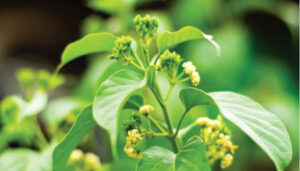
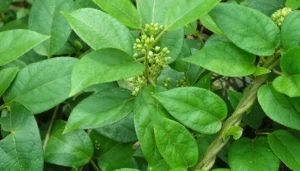
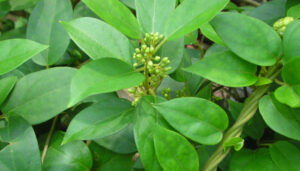
Ashwagandha (Withania somnifera) is one of Ayurveda’s most celebrated adaptogenic herbs. Its therapeutic power comes primarily from a family of steroidal lactones called withanolides – over 40 of which have been identified in the plant.
These withanolides drive ashwagandha’s most-researched effects:
- Boosting antioxidant enzymes such as superoxide dismutase (SOD) and catalase (CAT)
- Reducing inflammation by regulating cytokines including IL-6 and IL-1β
- Supporting healthy cell regulation through apoptosis pathways
- Acting as a powerful adaptogen for stress, anxiety, and cortisol management
- Enhancing muscle endurance, reproductive health, thyroid balance, and sleep quality
Standard ashwagandha extracts – typically prepared with water or ethanol – are standardized to 2.5%, 5%, or 10% withanolides. At 300-600 mg per day, they show well-documented clinical benefits. However, a core limitation remains: withanolides are inherently lipophilic (fat-soluble), which restricts their oral bioavailability, speeds their metabolism, and limits how much the body actually absorbs.
What Is AshwagandhaQA™ (EASI™) and How Is It Different?
AshwagandhaQA™ is produced by Energized Active Supplement Ingredients (EASI™), a proprietary technology platform that starts with the same base ashwagandha extract but then subjects it to a controlled “energization” process.
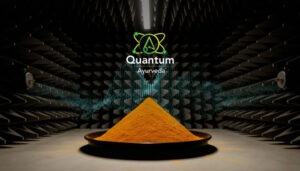
This process involves exposing the extract to controlled acoustic and magnetic vibrational energy, placing it into what researchers describe as a “metastable, primed state.” Crucially, this does not alter the chemical structure of the withanolides – the molecules remain identical. What changes is their physical and energetic state, which is designed to optimize:
- Particle size reduction for better dissolution
- Aqueous solubility enhancement
- Cellular uptake and membrane permeability
- Stability and retention in the body
These physicochemical differences have been confirmed using advanced spectroscopy – specifically FTIR (Fourier Transform Infrared Spectroscopy) and Raman spectroscopy – which show measurable differences in peak patterns and intensities between standard and AshwagandhaQA™ extracts.
| Parameter | Standard Ashwagandha Extract | AshwagandhaQA™ |
|---|---|---|
| Processing Method | Conventional extraction and drying | Energized Active Supplement Ingredients (EASI)™ platform |
| Core Technology | Standard phytochemical extraction | Quantum Ayurveda™ integrating traditional & quantum chemistry |
| Energy Treatment | Not applicable | Controlled acoustic/magnetic vibrational energy loading |
| Energetic State | Normal stable botanical state | Metastable, primed energetic state |
| Dissolution Rate | Standard dissolution | Faster dissolution via structural optimization |
| Bioavailability | Moderate; limited by withanolide lipophilicity | ~18× higher systemic exposure (AUC) |
| Dosage | 300–600 mg/day typically required | Lower or equal dose may achieve stronger effects |
| Analytical Techniques | HPLC & standard practices | Differences confirmed via FTIR & Raman Spectroscopy |
Clinical Evidence: The Pharmacokinetic Breakthrough
The most compelling data comes from a randomized, double-blind, crossover pharmacokinetic study comparing a 500 mg dose of standard 2.5% withanolide ashwagandha extract to a 500 mg dose of AshwagandhaQA™ (also 2.5% withanolides) in healthy adult volunteers under fasting conditions.
The results were striking:
| PK Parameter | Standard Extract | AshwagandhaQA™ | Improvement |
|---|---|---|---|
| AUC₀₋∞ (Systemic Exposure) | 69 ng·h/mL | 1261 ng·h/mL | ~18× Higher |
| Cmax (Peak Concentration) | 15.3 ng/mL | 86 ng/mL | ~5.6× Higher |
| t½ (Elimination Half-life) | 1.4 hours | 7.3 hours | ~5× Longer |
| MRT (Mean Residence Time) | 3.0 hours | 12.4 hours | ~4.1× Longer |
| Tmax (Time to Peak) | 2.5 hours | 2.5 hours | Comparable |
The most clinically significant finding is the AUC (Area Under the Curve), which represents total systemic exposure – essentially how much of the active compound actually reaches your bloodstream and tissues. An 18-fold improvement at the same dose and same withanolide concentration means your body is getting dramatically more benefit per milligram.
The extended half-life (7.3 hours vs. 1.4 hours) also supports once-daily dosing, improving convenience and adherence without sacrificing efficacy.
Who Can Benefit Most from AshwagandhaQA™?
Given its superior absorption profile, AshwagandhaQA™ may be especially well-suited for:
- Athletes and fitness enthusiasts seeking muscle endurance and recovery support
- Individuals with high stress or anxiety needing reliable cortisol management
- Those with poor supplement absorption or digestive sensitivity
- People looking to reduce their supplement dose burden while maintaining efficacy
- Anyone seeking science-backed sleep and hormonal support (thyroid, reproductive health)
Key Takeaways: Is AshwagandhaQA™ Worth It?
Standard ashwagandha extracts are well-researched and effective – but they work within the constraints of withanolide bioavailability. AshwagandhaQA™ tackles this limitation head-on through a physicochemical optimization that does not alter the chemistry of the herb, only its performance in the body.
The clinical pharmacokinetic data represents a meaningful step forward for ashwagandha supplementation. An 18× increase in systemic exposure, a 5.6× higher peak concentration, and a 4.1× longer mean residence time – all at the same dose – offer a compelling case for AshwagandhaQA™ as a next-generation ashwagandha ingredient.
For supplement formulators, healthcare practitioners, and consumers who want the most from their ashwagandha, the science behind AshwagandhaQA™ (EASI™) is worth a close look.
References
- Tahira HS, Dr. Rakthim, Dr. Muneeb. Pharmacokinetic study of AshwagandhaQA™ versus a standard Ashwagandha root extract in healthy humans: A randomized, double-blind, crossover, single-dose study. World Journal of Pharmaceutical Science and Research, 2026; 5(2), 176-182. https://doi.org/10.5281/zenodo.18439404
- Dipankar SP, et al. Pharmacological Insights Into Ashwagandha (Withania somnifera): A Review of Its Immunomodulatory and Neuroprotective Properties. Cureus. 2025;17(8):e89856. doi: 10.7759/cureus.89856.
- Speers AB, Lozano-Ortiz A, Soumyanath A. Quantifying Withanolides in Plasma: Pharmacokinetic Studies and Analytical Methods. Nutrients. 2024;16(22):3836. doi: 10.3390/nu16223836.
- Kim SK, et al. Pharmacokinetics and bioequivalence of Withania somnifera (Ashwagandha) extracts — A double-blind crossover study in healthy adults. Heliyon. 2023;9(12):e22843. doi: 10.1016/j.heliyon.2023.e22843.
- Rathi P, Kim SK. Randomized, Double-Blind, Crossover Study Comparing the Bioavailability of 4 Ashwagandha (Withania somnifera) Extracts in Healthy Adults Under Fasting Condition. Curr Ther Res Clin Exp. 2025;103:100805. doi: 10.1016/j.curtheres.2025.100805.