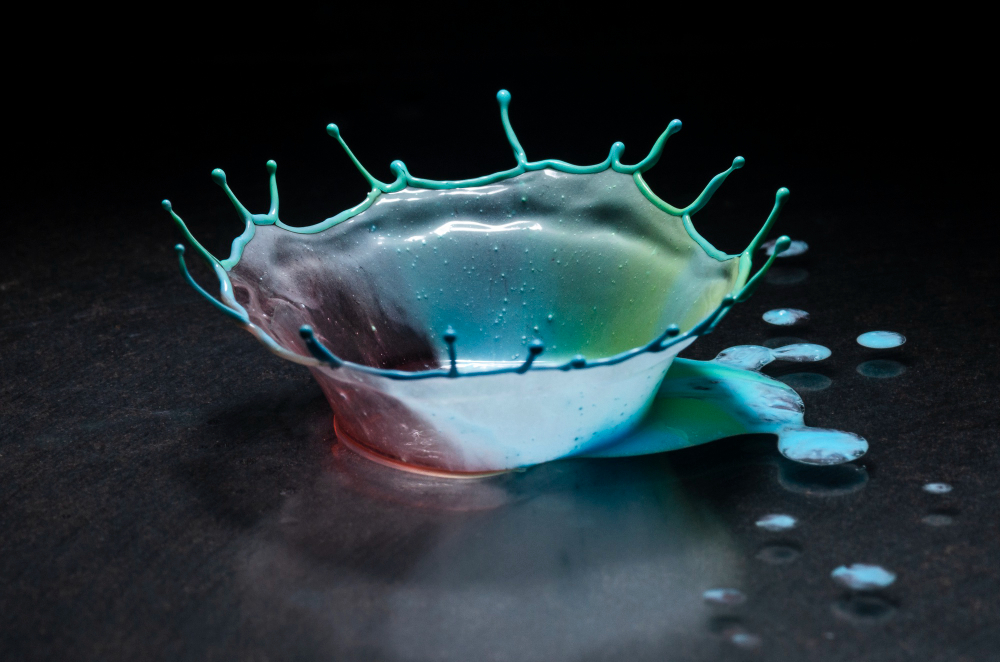
The adage that “oil and water do not mix” is a fundamental principle of classical thermodynamics. However, the development of nanoemulsions has provided a sophisticated engineering workaround. By manipulating matter at the nanoscale, it is possible to create kinetically stable systems where oil is seamlessly integrated into aqueous environments.
The Physics of the Nano-Scale
A nanoemulsion is a colloidal dispersion consisting of two immiscible liquids, with droplet sizes typically ranging from 20 to 200 nanometers. Unlike macroemulsions (such as milk), which appear opaque because their large particles scatter light, nanoemulsions are often translucent. This occurs because the droplets are smaller than the wavelength of visible light ($400$ to $700$ nm).
The creation of these systems generally requires:
- High-Shear Energy: Utilizing high-pressure homogenization or ultrasonication to break oil droplets down to the nanometric level.
- Surfactant Stabilization: Using amphiphilic molecules to reduce interfacial tension and prevent droplet coalescence.
Enhanced Bioavailability: Proven Case Studies
The primary industrial value of nanoemulsions lies in their ability to increase the bioavailability of lipophilic (oil-soluble) compounds. When a substance is rendered water-compatible, the human body can process it with significantly higher efficiency.
- Curcumin and Cellular Uptake
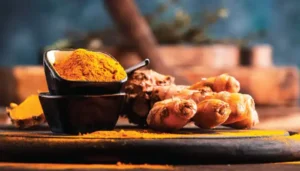
Curcumin, the active polyphenol in turmeric, has notoriously poor water solubility.
- The Study: Research published in the Journal of Agricultural and Food Chemistry compared standard curcumin powder to a nanoemulsion formulation.
- The Result: The nanoemulsion increased the oral bioavailability of curcumin by more than 9-fold. The smaller droplet size allowed for increased surface area, facilitating faster enzymatic digestion and absorption in the gastrointestinal tract.
- Pharmaceutical Delivery: Cyclosporine
Cyclosporine is an immunosuppressant used to prevent organ transplant rejection. Historically, its absorption was highly inconsistent.
- Case Study: The transition to Neoral®, a micro/nanoemulsifying drug delivery system (SMEDDS), revolutionized the treatment.
- The Result: Upon contact with gastric fluids, the formulation spontaneously forms a nanoemulsion. This eliminated the “food effect” (variability in absorption based on what the patient ate) and provided a predictable, linear absorption profile.
- Agricultural Efficacy: Essential Oil Pesticides
In sustainable agriculture, botanical oils are used as biopesticides but often fail due to poor spreading and stability.
- Case Study: A study on neem oil nanoemulsions showed that reducing droplet size to approximately $50$ nm improved the penetration of the oil into the cuticles of target insects.
- The Result: The nano-formulation achieved the same mortality rate as the bulk oil while using 40% less active ingredient, reducing environmental runoff.
Industrial Advantages
Beyond biological absorption, nanoemulsions offer several technical benefits:
- Kinetic Stability: Due to their incredibly small size, these droplets are dominated by Brownian motion rather than gravity. This prevents “creaming” or sedimentation, allowing for shelf lives that can exceed several years.
- Optical Clarity: In the beverage industry, nanoemulsions allow for the fortification of water with Vitamins A, D, E, and K without changing the appearance of the liquid.
- Precision Dosing: Because the oil is evenly distributed at a molecular level, every milliliter of a product contains an identical concentration of the active ingredient.
The transition from macro-scale mixtures to nanoemulsions represents a shift from simple blending to precise molecular engineering. By effectively overcoming the thermodynamic barriers between oil and water, these systems provide a robust solution for delivering nutrients, medications, and agrochemicals with unprecedented efficiency.
References:-
- McClements, D. J. (2012). Nanoemulsions versus microemulsions: Terminology, differences, and similarities. Soft Matter, 8(6), 1719–1729.
https://doi.org/10.1039/C2SM06903B
- Salvia-Trujillo, L., Soliva-Fortuny, R., Rojas-Graü, M. A., McClements, D. J., & Martín-Belloso, O. (2017). Edible Nanoemulsions as Carriers of Active Ingredients: A Review. Annual review of food science and technology, 8, 439–466.
https://doi.org/10.1146/annurev-food-030216-025908
- Yu, H., & Huang, Q. (2012). Improving the oral bioavailability of curcumin using novel organogel-based nanoemulsions. Journal of agricultural and food chemistry, 60(21),5373–5379. https://doi.org/10.1021/jf300609p
- Mueller, E. A., Kovarik, J. M., van Bree, J. B., Tetzloff, W., Grevel, J., & Kutz, K. (1994). Improved dose linearity of cyclosporine pharmacokinetics from a microemulsion formulation. Pharmaceutical research, 11(2), 301–304.
https://doi.org/10.1023/a:1018923912135
- Anjali, C. H., Sharma, Y., Mukherjee, A., & Chandrasekaran, N. (2012). Neem oil (Azadirachta indica) nanoemulsion–a potent larvicidal agent against Culex quinquefasciatus. Pest management science, 68(2), 158–163.
https://doi.org/10.1002/ps.2233

Author : Dr. Anand Solomon – Principal Scientist