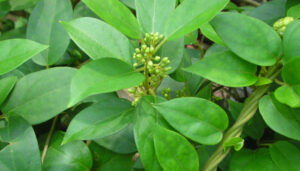
Madhunashini (Gymnema sylvestre), a perennial woody climber, is a highly valued medicinal plant widely used in herbal drugs, nutraceuticals, and traditional formulations, particularly for metabolic and blood sugar management. The plant naturally grows by climbing over trees and is commonly found in the dry forests of central and southern India, as well as other parts of Asia.
Although cultivation practices are established, a significant portion of commercial demand is still met through wild collection, making plantation statistics and supply tracking challenging.
Current Market Demand and Supply Dynamics
Nearly 80% of the total demand for Gymnema sylvestre leaves is fulfilled through collection from wild sources. This heavy dependence has led to overexploitation in several regions, causing the plant to become vulnerable or endangered in localized habitats. The increasing demand from the herbal medicine and nutraceutical industries has intensified pressure on natural populations, emphasizing the need for organized cultivation and conservation-focused approaches.
Role of Cultivation in Meeting Market Demand
Organized cultivation of Gymnema sylvestre plays a critical role in ensuring long-term supply sustainability and consistent quality. Cultivation allows standardized quality control, optimized harvest
timing, and controlled growing conditions that help maintain higher concentrations of gymnemic acid. Leaves are ideally harvested during the flowering stage, when active compound levels are at their peak.
Selective harvesting should begin after two years of plantation, with hand-plucking carried out twice a year, typically in June and October, to balance yield and plant health.
Variability in Gymnemic Acid Content
Studies have demonstrated considerable variation in gymnemic acid content based on geographical location within India. Differences in plant morphology and leaf characteristics across regions further influence yield and phytochemical composition. These findings highlight the importance of elite germplasm selection and region-specific cultivation practices to meet industry quality requirements.
Research and Institutional Support
Research institutions such as ICAR–DMAPR (Indian Council of Agricultural Research – Directorate of Medicinal and Aromatic Plants Research), Anand, Gujarat, actively maintain germplasm collections and conduct studies on elite Gymnema varieties. The National Medicinal Plants Board (NMPB) monitors state-wise production data, while Tamil Nadu Agricultural University (TNAU) provides detailed cultivation and agronomic guidelines for farmers.
Yield Potential and Crop Longevity
Under recommended cultivation practices, 3–4-year-old plants yield an average of 5–6 kg of dried leaves per plant. This results in approximately 10,000–15,000 kg of dried leaves per hectare. With proper management, Gymnema sylvestre plantations remain productive for 10–15 years, making the crop economically viable for long-term cultivation.
Sustainable and Non-Destructive Harvesting Practices
Sustainable harvesting is essential to preserve both cultivated and wild populations. Only mature leaves should be harvested, while young shoots and growing tips must be left intact. Leaves should be
hand-plucked rather than stripped, and at least 50–60% foliage must be retained. Uprooting or cutting the main stem should be strictly avoided, as Gymnema sylvestre is a slow-growing perennial climber.
Seasonal and Rotational Harvesting
Harvesting is most effective during the post-monsoon to early winter period, when leaf biomass and gymnemic acid levels are highest. Rotational harvesting cycles, with an 8–12 week recovery period for each plant, help maintain productivity. Dividing collection areas into harvest blocks further reduces pressure on plant populations.
Integrating Conservation with Cultivation
Promoting organized cultivation significantly reduces reliance on wild collection while supporting biodiversity conservation. Integrating Gymnema sylvestre into agroforestry systems improves soil health, enhances ecosystem stability, and provides supplementary income to farmers. Germplasm conserved through ex situ methods supports breeding programs aimed at developing elite, high-yielding varieties with superior gymnemic acid content.
References
Chinapolaiah, A., Chand, D., Thondaiman, V., Mittal, M. K., Parthvee, R. D., Manivel, P., & Kumar, S. (2019). Exploration, collection and conservation of Gymnema sylvestre germplasm from different parts of India. Journal of Pharmacognosy and Phytochemistry, 8(4), 38–45.
Pandey, A. K., & Yadav, S. (2010). Variation in gymnemic acid content and non-destructive harvesting of Gymnema sylvestre (Gudmar). Pharmacognosy Research, 2(5), 309–312. https://doi.org/10.4103/0974-8490.72330
Abdulrazaq, B., Ragosta, S., Vijendrakumar, K. B., & Ramakrishnan, S. (2023). Comprehensive review on origin, distribution, micropropagation and agronomical practices of Gymnema sylvestre R. Br.
International Journal of Environment and Climate Change, 13(8), 441–454. https://doi.org/10.9734/ijecc/2023/v13i81971
Animasaun, D. A. (2015). Selection of elite lines from accessions of Gymnema sylvestre (Gudmar) based on characterization of foliage and gymnemic acid yield. International Journal of Medicinal Plants, 108, 596–605.
Pandey, A. K., & Das, R. (2014). Good field collection practices and quality evaluation of medicinal plants: Prospective approach to augment utilization and economic benefits. Research Journal of Medicinal Plants, 8(1), 1–19.
Tamil Nadu Agricultural University. (n.d.). Gymnema sylvestre – medicinal crops. https://agritech.tnau.ac.in/horticulture/horti_medicinal%20crops_gymnema.html

Author : Ms.Tahira H S – Chief research officer