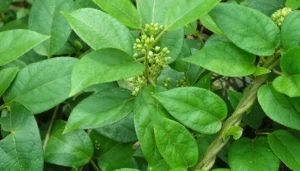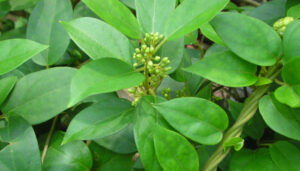
Ashwagandha (Withania somnifera), often called Indian ginseng or Winter cherry, is a small evergreen shrub deeply rooted in Ayurveda and Traditional Indian Medicine. For centuries, its roots are the most celebrated part of the plant, widely used for stress reduction, vitality, and overall wellness.
However, modern scientific research is now turning its attention beyond the root. Emerging evidence highlights the leaves of Ashwagandha as a distinct and powerful phytochemical reservoir, rich in bioactive compounds with promising therapeutic applications. Far from being secondary plant material, the leaves are gaining recognition as a standalone scientific resource1.
Comparative Table: Ashwagandha Leaves and Roots
| Comparative Table: Ashwagandha Leaves and Roots |
Comparative Table: Ashwagandha Leaves and Roots |
Comparative Table: Ashwagandha Leaves and Roots |
|---|---|---|
| Parameters | Roots | Leaves |
| Traditional uses2,3 | Stress relief, rejuvenation (Rasayana), strength enhancement |
Fever, inflammation, wounds, skin infections |
| Primary application2,3,4,5 |
Adaptogenic tonic | Anti-inflammatory, neuroprotective, antimicrobial |
| Historical emphasis2,4 | Core part of classical Ayurvedic formulations |
Secondary / condition-specific traditional use |
| Research focus3,4,5,6 | Extensive clinical and human studies |
Growing preclinical and mechanistic studies |
| Safety considerations3,6 |
Well established, widely standardized |
Requires further clinical standardization |
| Overall therapeutic positioning2,3,4,5 |
Systemic adaptogen and vitality enhancer |
Systemic adaptogen and vitality enhancer |
Ethnomedical and Folkloric Use of Ashwagandha Leaves
Long before modern analytical tools were available, Ashwagandha leaves played a meaningful role in folk medicine and indigenous healthcare systems across India7. Traditional healers used fresh leaf pastes to treat boils, painful swellings, carbuncles, and skin infections, relying on their ability to reduce pain and inflammation7. Leaf decoctions were commonly prescribed for fever, fatigue, and general weakness, underscoring their role as a supportive tonic in everyday health practices. These ethnomedical uses laid the foundation for today’s scientific investigations2.
Bioactive Compounds: The Power Concentrated in the Leaves
Phytochemical studies now confirm that Ashwagandha leaves are biochemically dense, often containing a broader spectrum and higher concentration of secondary metabolites than the roots8,9.
Major Withanolides identified in the leaves include:
- Withaferin A
- Withanone
- Withanolide A, B, C, D, and F
- Deoxywithastramonolide8,10
In addition, leaves contain alkaloids such as anaferine, somniferine, and anahygrine, which contribute to neuromodulatory and pharmacodynamic effects3,9. The leaves contain approximately 4% total flavonoids, providing strong antioxidant and cytoprotective activity. A unique compound, triethylene Glycol (TEG) found only in the leaves is identified as a key mediator of sleep induction, especially non-rapid eye movement (NREM) sleep11.
Comparative Table: Bioactive Compounds in Ashwagandha Leaves and Roots
| Comparative Table: Bioactive Compounds in Ashwagandha Leaves and Roots |
Comparative Table: Bioactive Compounds in Ashwagandha Leaves and Roots |
Comparative Table: Bioactive Compounds in Ashwagandha Leaves and Roots |
|---|---|---|
| Category of Bioactive Compounds |
Roots | Leaves |
| Withanolides (steroidal lactones) 3,7-10 |
Moderate diversity, traditionally emphasized |
High diversity and higher concentration |
| Major Withanolides3,7-10 | Withanolide A, Withanolide D, Withanolide E |
Withanone, Withanolide A, Withanolide D |
| Withaferin A3,10 | Low to trace | Very high (principal compound) |
| Withanone3,10 | Moderate | High |
| Alkaloids3,8 | Moderate to high | Low to moderate |
| Major alkaloids4,8 | Anaferine, Cuscohygrine, Tropine, Anahygrine |
Anaferine, Isopelletierine (minor) |
| Sitoindosides (glycowithanolides) 3 |
High (Sitoindoside VII–X) | Low |
| Flavonoids9 | Very low or absent | Present (quercetin, kaempferol derivatives) |
| Phenolic compounds8,9 | Low | Moderate |
| Saponins8-10 | Moderate | Low |
| Coumarins8-10 | Trace or low | Trace |
| Sterols (β-sitosterol) 8-10 | Present | Present |
| Iron content8 | Low | Moderate |
| Unique compounds11 | – | Triethylene glycol (TEG) |
Scientifically Validated Biological Activities of Ashwagandha Leaves
Anti-cancer activity
Withaferin A is one of the most extensively studied leaf-derived compounds. It induces apoptosis in multiple cancer cell lines, including breast, pancreatic, and melanoma cancers. It also acts as a radiosensitizer, enhancing the effectiveness of radiation therapy while inhibiting tumor growth and metastasis in vivo10,12,13.
Anti-inflammatory Effects
Leaf extracts exhibit pronounced anti-inflammatory activity through the suppression of NF-κB signaling, downregulation of pro-inflammatory cytokines such as TNF-α and IL-6, and modulation of inflammation associated enzymes, supporting their potential role in inflammatory disorders14.
Neuroprotective and Sleep-Modulating Effects
Withanone demonstrates selective action against malignant cells while safeguarding normal cells from oxidative-induced damage, indicating a favorable safety profile. Triethylene glycol (TEG), is known to influence central nervous system (CNS) activity by promoting restorative non-rapid eye movement (NREM) sleep, highlighting its relevance in sleep regulation and insomnia management11.
Antioxidant support
Both in vitro and in vivo studies indicate substantial antioxidant activity characterized by free radical scavenging, cellular protection from oxidative injury, and enhancement of endogenous antioxidant defense enzymes. These effects underscore the utility of extract in mitigating oxidative stress-associated conditions7.
Antibacterial and Wound-Healing Support
Ashwagandha leaves extract show antibacterial activity against both Gram-positive and Gram-negative bacteria, supporting its traditional use in wound care and skin health7.
Immune and Stress Regulation
Leaf-based formulations support hypothalamic-pituitary-adrenal (HPA) axis balance, reduce cortisol levels, and lower systemic inflammatory markers such as TNF-α and IL-615.
Safety considerations and contradictions of Withania somnifera leaves
The key safety considerations and situations where Ashwagandha leaves should be avoided are
summarized below15,16.
- Although Withania somnifera leaves contain bioactive Withanolides similar to those found in the roots,
there is limited direct clinical safety evidence. - Avoid during pregnancy and breastfeeding.
- Discontinued at least two weeks prior to surgery due to potential sedative interactions with anesthesia.
- Individuals with thyroid disorders should exercise caution, as Ashwagandha preparations may
influence thyroid hormone levels - Those with pre-existing liver disease should avoid use due to rare reports of herb-induced liver injury
associated with Ashwagandha products. - Until leaf-specific human safety studies are available, medical consultation is recommended before
using Ashwagandha leaf preparations, particularly in vulnerable populations.
Conclusion
Ashwagandha leaves are no longer merely a secondary plant part. They represent a scientifically validated, phytochemically rich, and therapeutically promising resource. With their high concentration of Withanolides, flavonoids, and phenolic compounds, the leaves demonstrate potent anti-inflammatory, antioxidant, antibacterial, neuroprotective, and sleep-modulating effects.
For researchers, formulators, and the nutraceutical and pharmaceutical industries, Ashwagandha leaves offer a compelling opportunity to rethink how this ancient medicinal plant is studied, standardized, and applied. The future of Ashwagandha research may well lie beyond the roots.
References
- Martorana M, et al. Therapeutic potential of Withania somnifera (Ashwagandha): a comprehensive review of its phytochemical, pharmacological, and clinical applications. J Biol Pharm Res. 2025.
- Singh N, Bhalla M, de Jager P, Gilca M. An overview on ashwagandha: a Rasayana (rejuvenator) of Ayurveda. Afr J Tradit Complement Altern Med. 2011;8(5 Suppl):208–213. doi:10.4314/ajtcam.v8i5S.9. PMID:22754076; PMCID:PMC3252722.
- Mishra LC, Singh BB, Dagenais S. Scientific basis for the therapeutic use of Withania somnifera (ashwagandha): a review. Altern Med Rev. 2000 Aug;5(4):334–346. PMID:10956379.
- Kulkarni SK, Dhir A. Withania somnifera: an Indian ginseng. Prog Neuropsychopharmacol Biol Psychiatry. 2008 Jul 1;32(5):1093–1105. doi:10.1016/j.pnpbp.2007.09.011. PMID:17959291.
- Panda S, Kar A. Withania somnifera and Bauhinia purpurea in the regulation of circulating thyroid hormone concentrations in female mice. J Ethnopharmacol. 1999;67(2):233–239. doi:10.1016/S0378-8741(99)00018-5.
- Raut AA, Rege NN, Tadvi FM, Solanki PV, Kene KR, Shirolkar SG, et al. Exploratory study to evaluate tolerability, safety, and activity of Ashwagandha (Withania somnifera) in healthy volunteers. J Ayurveda Integr Med. 2012 Jul;3(3):111–114. doi:10.4103/0975-9476.100168. PMID:23125505; PMCID:PMC3487234.
- Alam N, Hossain M, Mottalib MA, Sulaiman SA, Gan SH, Khalil MI. Methanolic extracts of Withania somnifera leaves, fruits and roots possess antioxidant properties and antibacterial activities. BMC Complement Altern Med. 2012 Oct 7;12:175. doi:10.1186/1472-6882-12-175. PMID:23039061; PMCID:PMC3527235.
- Mirjalili MH, Moyano E, Bonfill M, Cusido RM, Palazón J. Steroidal lactones from Withania somnifera, an ancient plant for novel medicine. Molecules. 2009 Jul 3;14(7):2373–2393. doi:10.3390/molecules14072373. PMID:19633611; PMCID:PMC6255378.
- Chaurasiya ND, Uniyal GC, Lal P, Misra L, Sangwan NS, Tuli R, et al. Analysis of Withanolides in root and leaf of Withania somnifera by HPLC with photodiode array and evaporative light scattering detection. Phytochem Anal. 2008 Mar–Apr;19(2):148 154. doi:10.1002/pca.1029. PMID:17879227.
- Jayaprakasam B, Zhang Y, Seeram NP, Nair MG. Growth inhibition of human tumor cell lines by Withanolides from Withania somnifera leaves. Life Sci. 2003 Nov 21;74(1):125–132. doi:10.1016/j.lfs.2003.07.007. PMID:14575818.
- Kaushik MK, Kaul SC, Wadhwa R, Yanagisawa M, Urade Y. Triethylene glycol, an active component of Ashwagandha (Withania somnifera) leaves, is responsible for sleep induction. PLoS One. 2017 Feb 16;12(2):e0172508. doi:10.1371/journal.pone.0172508. PMID:28207892; PMCID:PMC5313221.
- Stan SD, Hahm ER, Warin R, Singh SV. Withaferin A causes FOXO3a- and Bim-dependent apoptosisand inhibits growth of human breast cancer cells in vivo. Cancer Res. 2008 Sep 15;68(18):7661–7669.doi:10.1158/0008-5472.CAN-08-1510. PMID:18794155; PMCID:PMC2562581.
- Widodo N, Priyandoko D, Shah N, Wadhwa R, Kaul SC. Selective killing of cancer cells by Ashwagandha leaf extract and its component Withanone invBaolves ROS signaling. PLoS One. 2010 Oct 21;5(10):e13536. doi:10.1371/journal.pone.0013536. PMID:20975835; PMCID:PMC2958829.
- Gupta M, Kaur G. Aqueous extract from the Withania somnifera leaves as a potential anti-neuroinflammatory agent: a mechanistic study. J Neuroinflammation. 2016 Aug 22;13(1):193. doi:10.1186/s12974-016-0650-3. PMID:27550017; PMCID:PMC4994385.
- Mikulska P, Malinowska M, Ignacyk M, Szustowski P, Nowak J, Pesta K, et al. Ashwagandha (Withania somnifera)—current research on the health-promoting activities: a narrative review. Pharmaceutics. 2023 Mar 24;15(4):1057. doi:10.3390/pharmaceutics15041057. PMID:37111543; PMCID:PMC10147008.
- National Institutes of Health, Office of Dietary Supplements. Ashwagandha (Withania somnifera): fact sheet for health professionals [Internet]. Bethesda (MD): NIH; updated 2024 [cited 2026 Jan 16]. Available from: https://ods.od.nih.gov/factsheets/Ashwagandha-HealthProfessional/


Author : Tahira H S Author : Dr Debjit Ghosh